Pozi Vs Phillips Flat Pack Mistake Uk
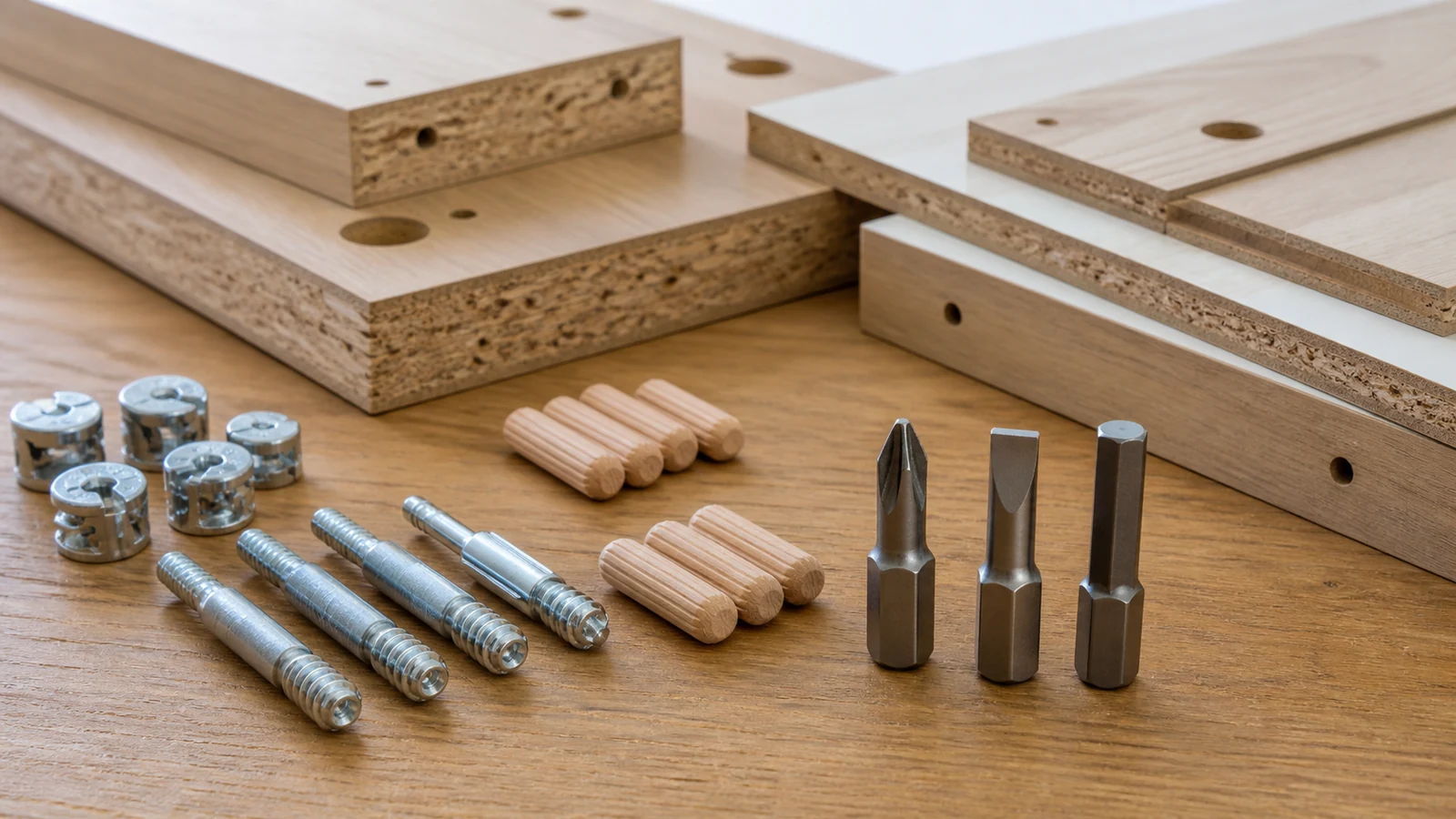
The common flat-pack mistake is not “using a screwdriver” but using the wrong bit and forcing it. Phillips, Pozi and hex fasteners can look similar when you are tired, the light is poor and the wardrobe parts are covering the floor. The right move is to test fit before turning hard.
Flat Pack Advice warns that using the wrong screws can damage the product and recommends starting electric drivers on a low torque setting in its flat-pack assembly tips. That is the whole lesson in miniature: fit first, force last, and stop before the screw head becomes round.
Annotated example: before you turn
Step one: look into the head. A Phillips recess is a simple cross. A Pozi recess usually has extra smaller ribs between the main cross slots. A hex bolt has six flat internal sides and wants an Allen or hex bit, not a cross-head driver.
Step two: seat the bit. Put the bit into the screw without turning. If it rocks, bottoms out loosely or only touches at the point, change size or type. The correct bit fills the recess more fully and stays centred with light pressure.
Step three: make one gentle test turn. If the bit climbs upward or clicks out, that is cam-out. Do not solve cam-out by pushing harder on particleboard. Switch bit, slow down or use a hand driver.
Step four: separate screw choice from bit choice. Many flat-pack packs include similar screws in different lengths. Sort the hardware before assembly so the correct bit does not drive the wrong screw into the wrong panel.
Hand driver or powered driver?
A low-torque powered driver can save wrists on repetitive fasteners, but a hand driver gives better feel near cam locks, soft board and final tightening. The safer pattern is powered driver for the easy middle of the job and hand driver for starting, alignment and final snugging. If you only own a drill, use the lowest clutch setting and stop short of final tightness.
What to do when the head is already damaged
First, stop making it worse. Clear dust from the recess, try the next best-fitting bit by hand, and press straight down. A rubber band trick can sometimes add grip for a lightly damaged head, but it is not magic. If the fastener is structural or the head is badly rounded, request replacement hardware or use the manufacturer’s support route.
Mixed set or one loose bit?
Buy one loose bit when you know exactly what is missing and the job is rare. Choose a mixed set when your home has furniture from several sources, battery covers, shelves, brackets and future move-outs. The value is not only the number of pieces. It is the ability to compare adjacent sizes instead of pretending the nearest bit is good enough.
This is where a Sorako-style hard-case set can be relevant: the verified product route shows mixed household and precision coverage plus a magnetiser/demagnetiser. It is a fit for people assembling and maintaining many items over time. It is overkill for one chair with four identical hex bolts.
Negative fit and stop conditions
Do not upgrade tools if the real problem is missing furniture parts, mis-drilled panels, cracked board or a screw that spins freely in stripped material. Stop if a fastener carries bed-frame load and will not tighten, if a cam lock breaks, or if the instructions call for wall anchoring and you are not allowed to drill. At that point, a better screwdriver cannot fix the underlying problem.
Why the mistake happens
Flat-pack assembly compresses several decisions into one evening. You are matching screws to diagrams, holding panels upright and trying to finish before the room becomes unusable. In that state, a cross-shaped recess looks like any other cross-shaped recess. The damage starts when the bit touches only the shallow centre of the screw. It feels as though pressure will solve the slip, but pressure often chews the recess faster.
Pozi-style screws are common enough in UK furniture and general hardware that a home kit should include Pozi bits, but the practical rule is still visual fit. If the bit sits proud, wobbles or leaves shiny wear after one turn, it is not the right match. Stop, compare the next size and test by hand. The thirty seconds spent here can save a ten-minute extraction problem later.
Trade-offs and alternatives
A dedicated flat-pack driver can be enough for one move. A mixed case is better when your home contains furniture from different suppliers, older fixtures and small household devices. A powered screwdriver can speed repetitive screws, but it hides feedback. A hand driver is slower, but you feel resistance early. The best workflow often uses both: hand-start, powered middle, hand-finish.
If the screw packet includes spares, do not treat leftovers as proof that you missed a step, but do not ignore a structural fastener either. Re-read the diagram, compare lengths and avoid driving a long screw where a short one belongs. Wrong screw length can damage the panel even when the screwdriver bit is perfect.
When this check is not enough
Do not use a household screwdriver-set article as permission to do electrical, gas, structural, landlord-responsibility, caravan mains or other regulated repair work.
When to stop and call someone qualified
Stop and call maintenance, a landlord, a qualified electrician or another competent professional when a job involves live electrics, gas, structural fixings, damaged tools, unsafe access or tenancy restrictions.
Direct answer and decision sections
Answered through the opening, useful element, negative-fit and stop-condition sections.
Direct answer and decision sections
Answered through the opening, useful element, negative-fit and stop-condition sections.
Direct answer and decision sections
Answered through the opening, useful element, negative-fit and stop-condition sections.
Direct answer and decision sections
Answered through the opening, useful element, negative-fit and stop-condition sections.
Direct answer and decision sections
Answered through the opening, useful element, negative-fit and stop-condition sections.
Direct answer and decision sections
Answered through the opening, useful element, negative-fit and stop-condition sections.