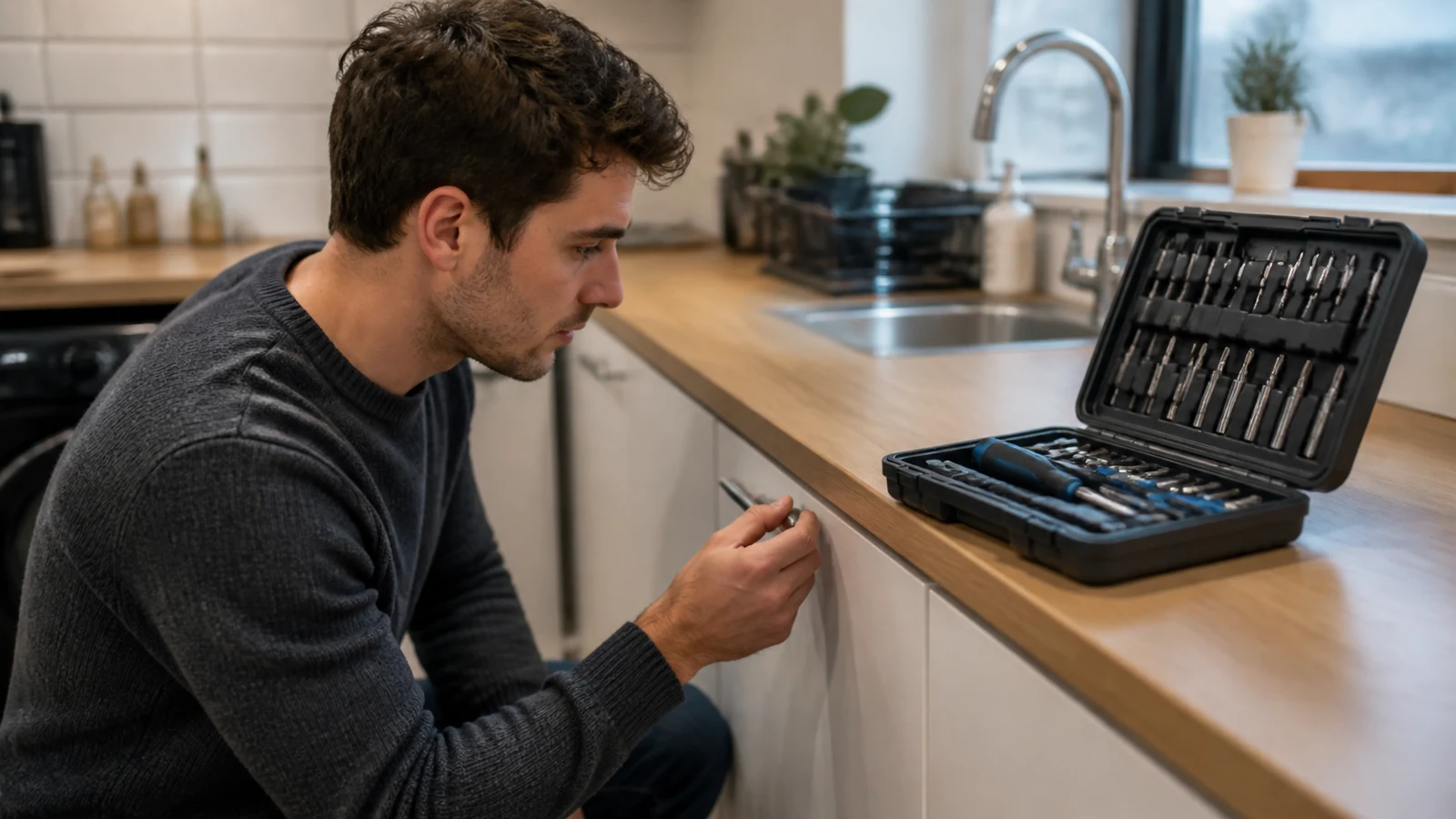
Screwdriver Set For Rented Flat
A screwdriver set for a rented flat is useful for reversible, low-risk fixes: tightening a loose handle, adjusting a hinge, assembling your own furniture and stopping a chair from wobbling. It is not a shortcut around your tenancy, your deposit, or the landlord’s safety duties.
Start with the official boundary. GOV.UK says landlords are responsible for key repairs including structure, heating, hot water, gas appliances and electrical wiring in its private renting repairs guidance. GOV.UK also says landlords must keep electrical systems safe in its landlord safety responsibilities. That does not mean you cannot tighten your own desk. It means you should separate tenant-friendly adjustment from building repair.
The rented-flat diagnostic ladder
- Is it yours? If it is your flat-pack desk, chair, shelf unit or removable storage, a screwdriver is usually reasonable.
- Is it reversible? Tightening a screw is different from drilling a new hole, cutting material or replacing a fitted part.
- Is it dry, cool and mechanical? Handles, hinges and cam locks are tool-kit territory. Heat, burning smells, buzzing or electricity are not.
- Could it affect the building or another tenant? If yes, document and report.
- Will the tenancy agreement object? If you are unsure, ask before doing the work.
Jobs that normally fit the kit
The best rented-flat jobs are boring. Tighten a saucepan handle. Re-seat a cabinet knob that was already loose. Adjust your own wardrobe door. Rebuild a bed frame after moving rooms. Tighten the screws on a dining chair you bought yourself. These are everyday annoyances, not repair projects.
A magnetic screwdriver set helps when screws are tiny or awkwardly placed. A hard case also solves a renter problem that cheap loose tools create: every move loses one bit. If the case has fixed positions, you can check the kit before a tenancy ends and avoid leaving bits in drawers.
Where the landlord remains responsible
GOV.UK’s How to rent a safe home guidance advises tenants to report health and safety issues and keep a copy. For electrics, Electrical Safety First is plainer: its tenant advice says tenants should never try to carry out their own electrical repairs. That covers loose sockets, damaged wiring, repeated tripping, scorch marks, hot plugs, appliance faults supplied with the property and anything that makes you unsure.
For deposit safety, treat photos as part of the tool kit. Before tightening a supplied cupboard hinge, photograph the existing problem. Afterward, photograph the unchanged surface and the fixed screw. If the job needs a new part, different hole, adhesive, sealant, paint or cutting, it has moved beyond a simple screwdriver adjustment.
Who should not buy a full rented-flat kit
Do not buy a large set if you are in a serviced room where staff handle every maintenance job, if your budget is under pressure and you only need one hex key today, or if the main problems are damp, heating, leaks or unsafe electrics. Those are landlord and local authority conversations, not tool purchases.
Conditional next step
When your actual need is flat-pack assembly, loose furniture, cabinet screws and a tidy case that moves with you, the Sorako 118-piece detail page is a relevant internal next step. The set makes sense as a renter-owned kit, not as permission to repair the landlord’s wiring or fixtures.
Stop conditions
Stop immediately for burning smells, heat, sparks, exposed wiring, damp near electrics, a loose socket faceplate, a repair that needs drilling into the building, or any fault you would be nervous explaining at check-out. Put the issue in writing to the landlord or agent and keep the record.
How to document a tiny fix
Renters often worry less about the screw and more about the later conversation. The clean approach is to document anything that involves supplied furniture or fittings. Take a photo of the loose handle, tighten only the existing screw into the existing hole, then take a second photo showing the same surface with no new marks. If the screw will not bite, stop there. A stripped hole, cracked hinge plate or missing part is no longer a simple adjustment.
For shared flats, also ask whether the item is yours, the landlord’s or a housemate’s. Tightening your own desk is different from altering the front door closer or a fitted kitchen unit. The best screwdriver set for a renter is the one that helps with movable, reversible problems while making it easy to walk away from anything that belongs in the repair log.
Trade-offs before buying
A tiny kit is cheaper and easier to store, but it can leave you stuck when a Pozi, Torx or hex fastener appears. A larger hard case costs more and takes space, but it reduces repeat purchases and survives moves better. The decision is not whether 118 pieces sounds impressive. The decision is whether your rented life includes enough changing furniture, small repairs and moves to make organised coverage useful.
When this check is not enough
Do not use a household screwdriver-set article as permission to do electrical, gas, structural, landlord-responsibility, caravan mains or other regulated repair work.
When to stop and call someone qualified
Stop and call maintenance, a landlord, a qualified electrician or another competent professional when a job involves live electrics, gas, structural fixings, damaged tools, unsafe access or tenancy restrictions.
Direct answer and decision sections
Answered through the opening, useful element, negative-fit and stop-condition sections.
Direct answer and decision sections
Answered through the opening, useful element, negative-fit and stop-condition sections.
Direct answer and decision sections
Answered through the opening, useful element, negative-fit and stop-condition sections.
Direct answer and decision sections
Answered through the opening, useful element, negative-fit and stop-condition sections.
Direct answer and decision sections
Answered through the opening, useful element, negative-fit and stop-condition sections.
Direct answer and decision sections
Answered through the opening, useful element, negative-fit and stop-condition sections.