
Why Every UK DIYer Needs a Reliable Set of Magnetic Screwdrivers in Their Toolbox
A practical guide to choosing and using magnetic-tipped screwdrivers for household repairs, flat-pack assembly, and safe electrical work across the UK — written from years of hands-on experience in Belfast.
Why Magnetic Tips Make All the Difference
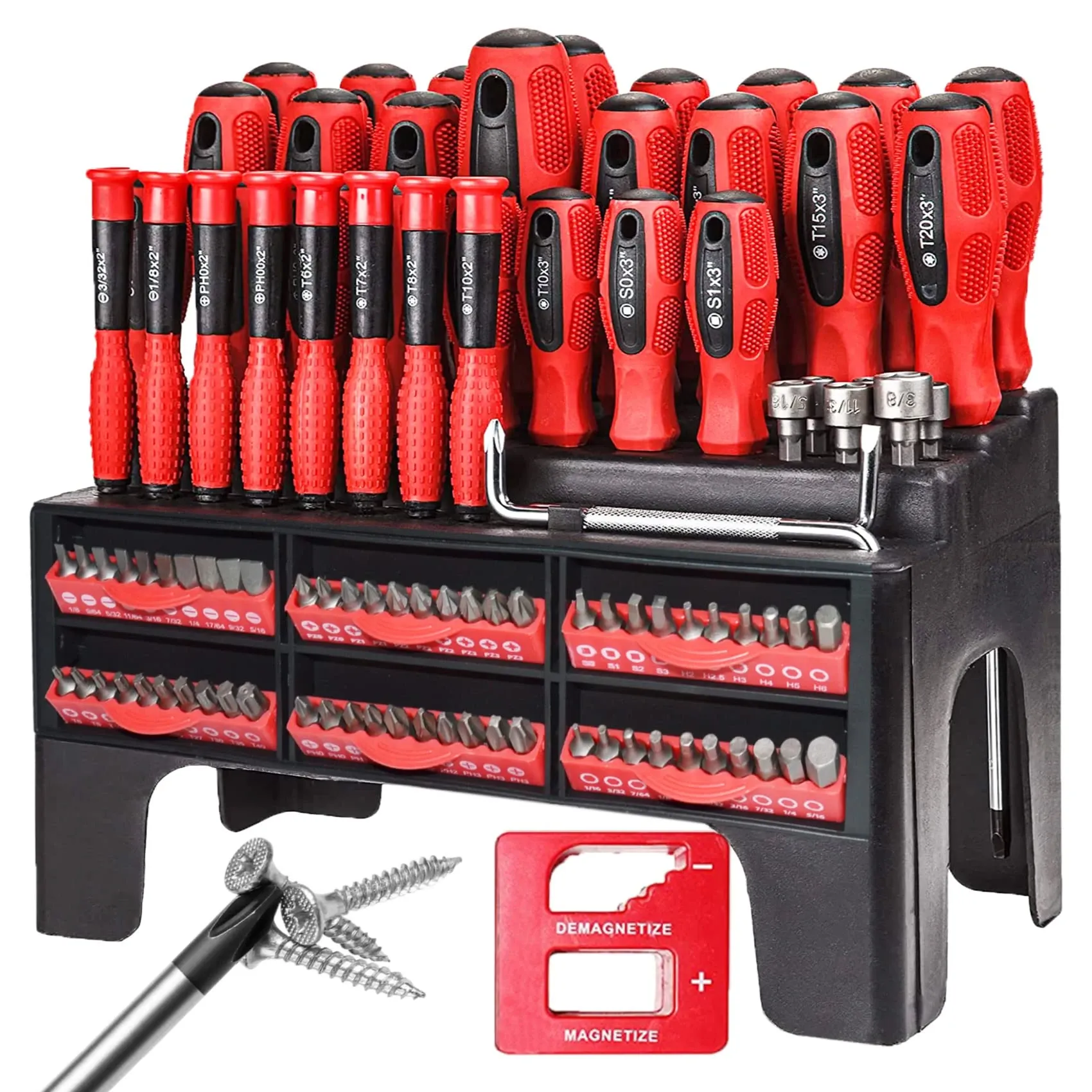
A decent set of magnetic screwdrivers isn't a luxury — it's the difference between a 10-minute fix and a frustrating hour on your knees fishing for dropped screws. I've been doing repairs around the house and helping neighbours on the Shankill Road for years now, and honestly, the single upgrade that saved me the most grief was switching to magnetised tips.
Here's the thing. Standard screwdrivers let tiny M3 and M4 screws slip off the moment you tilt your wrist past about 15 degrees. Magnetic tips hold fasteners at angles up to 45 degrees without any grip pressure. That matters when you're reaching behind a radiator in January or working overhead fitting a smoke alarm to the ceiling.
The efficiency gain is real. In my experience, magnetic tips cut assembly time by roughly 25–30% on repetitive tasks like flat-pack furniture. You're not constantly re-seating screws. You're not dropping them into carpet pile where they vanish. You just place, drive, done.
How Magnetic Tips Actually Work
Most quality magnetic screwdriver sets use permanently magnetised chrome-vanadium steel tips. The magnet strength typically ranges from 8 to 12 Gauss at the tip face — enough to hold a standard wood screw (3.5 × 30mm) securely, but not so strong it interferes with sensitive electronics. Some cheaper sets use bolt-on magnetic sleeves, which work but add bulk to the tip diameter by 1–2mm. That extra width can be a problem in tight recesses.
Common UK Household Tasks Where a Magnetic Screwdriver Set Shines
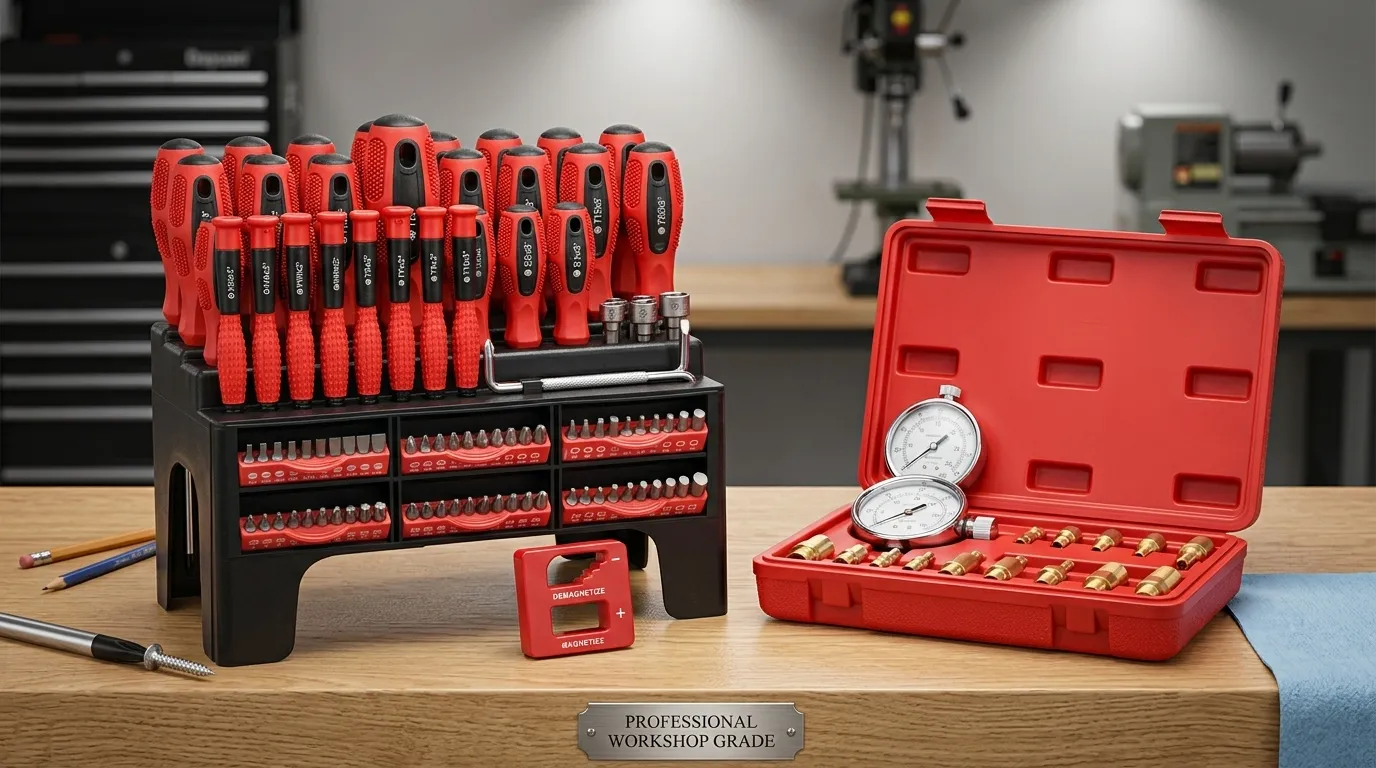
Magnetic-tipped screwdrivers earn their keep on specific jobs that come up constantly in British homes. Let me walk through the big ones.
Flat-Pack Furniture Assembly
We've all been there. IKEA instructions spread across the floor, 47 cam bolts in a plastic bag, and a partner losing patience. A multi-bit screwdriver set with magnetic retention makes this bearable. The average BILLY bookcase uses 14 Phillips-head screws and 8 cam locks — that's 22 opportunities to drop a fastener into the carpet. Magnetic tips eliminate that entirely.
I assembled a full PAX wardrobe system last spring. Three units, roughly 180 screws total. Took me just under two hours. Without magnetic tips? I'd budget three and a half, easy.
Electrical Socket and Switch Replacement
Replacing a UK double socket means working with M3.5 × 25mm machine screws in a back box that's only 35mm deep. Drop one behind the plasterboard and you're fishing with a magnet on a stick — or worse, pulling the box out. A precision screwdriver set with magnetic tips keeps those tiny screws exactly where they need to be.
Appliance Repairs
Modern appliances use an absurd variety of fastener types. A washing machine door latch alone might need Torx T20, Phillips PH2, and a hex socket. Having a screwdriver set with bits that covers all common profiles means you're not hunting through three different toolboxes.
Garden and Outdoor Maintenance
Fence brackets, gate hinges, shed repairs. Working outdoors in Belfast weather — which, let's be honest, means rain about 200 days a year — you need screws that stay put on the driver while you position them one-handed. Magnetic tips are brilliant for this.
How to Choose the Right Set of Magnetic Screwdrivers for Your Needs
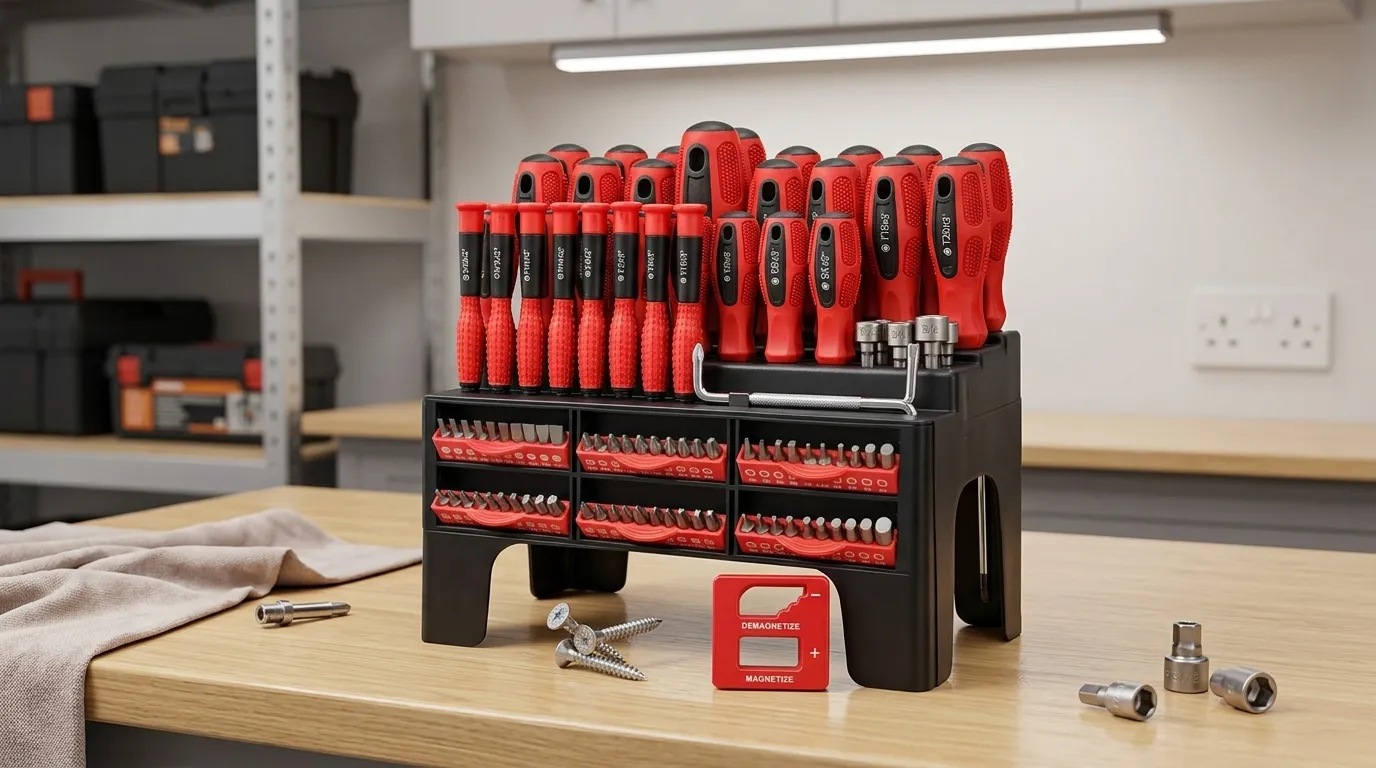
Not all magnetic screwdriver sets are equal. The market in 2026 ranges from £8 bargain-bin sets to £150+ professional kits. Here's what actually matters when you're choosing.
Bit Coverage and Count
For general home repair tool kit use, you want coverage across these profiles at minimum:
- Phillips: PH0, PH1, PH2, PH3
- Slotted: 3mm, 5mm, 6.5mm
- Torx: T10, T15, T20, T25, T30
- Hex: 2mm, 2.5mm, 3mm, 4mm, 5mm
- Pozidriv: PZ1, PZ2, PZ3 (essential for UK woodwork)
That's 20 profiles minimum. A set like the Sorako 118-piece screwdriver set covers all of these and more, which means you're sorted for basically any household job without buying specialist bits separately.
Handle Ergonomics
This gets overlooked. If you're driving 50+ screws in a session — and flat-pack assembly regularly demands that — a poorly shaped handle will leave your palm aching. Look for tri-lobe or hex-profile handles with soft-grip zones. The handle diameter should be between 30mm and 38mm for general use. Anything smaller causes hand fatigue; anything larger reduces fine control.
Shaft Material and Hardness
Chrome-vanadium (Cr-V) steel rated to HRC 58–62 is the sweet spot. Below HRC 56, tips deform under torque. Above HRC 63, they become brittle and can chip. The Sorako magnetic screwdriver set uses S2 alloy steel bits hardened to HRC 60 — that's the same grade you'll find in professional-tier hand tools., a favourite among Britain’s tradespeople
Storage and Organisation
Sounds minor. It isn't. A well-organised case means you grab the right bit first time. Loose bits rattling in a drawer get lost, damaged, and mixed up. Blow-moulded cases with labelled slots are ideal. Magnetic bit holders inside the case are even better — they stop bits falling out when you open the lid at an angle.
Safety Benefits: Using Magnetic Screwdrivers for Electrical Work
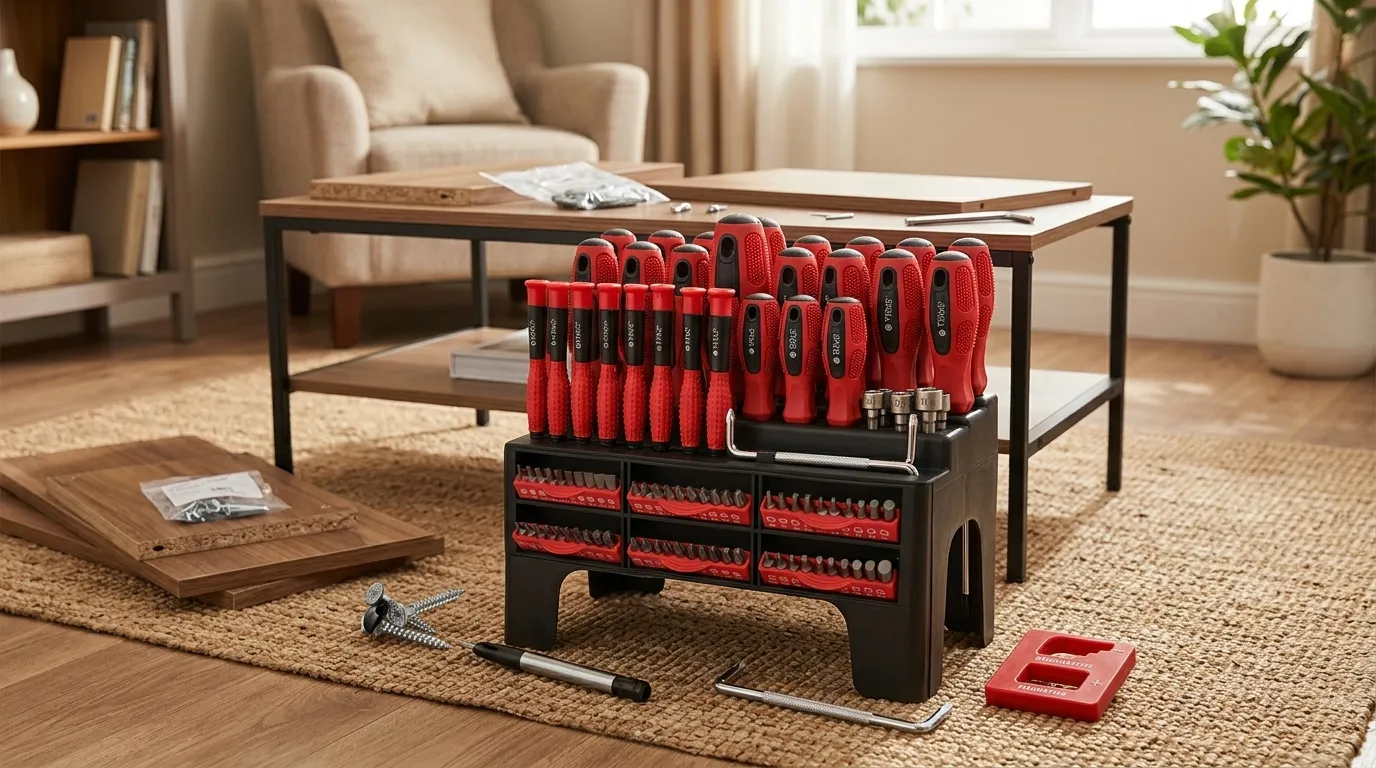
Working on electrics in the UK requires respect for the regulations. Part P of the Building Regulations covers domestic electrical work, and the Health and Safety Executive (HSE) provides clear guidance on safe working practices around electricity.
So can you use magnetic screwdrivers on electrical work? Yes — with the right precautions.
VDE-Rated Insulated Screwdrivers
For any work on live or potentially live circuits, you need a VDE screwdriver set rated to 1000V AC. The VDE certification, tested to BS EN 60900 standards, guarantees the insulation will protect you against accidental contact with live conductors. A good insulated screwdriver set combines VDE protection with magnetic tips — you get the safety and the convenience.
There's a common misconception worth clearing up here. Some people worry that magnetic tips will interfere with electrical circuits or attract live wires. At the field strengths we're talking about (8–12 Gauss), there's zero risk of electromagnetic interference with household 230V 50Hz circuits. The Earth's magnetic field is stronger than most screwdriver tips.
Voltage Tester Screwdrivers
A voltage tester screwdriver is a must-have in any UK household screwdriver set. These detect the presence of AC voltage (typically 100–250V) through a neon indicator in the handle. They won't replace a proper multimeter for precise readings, but they'll tell you instantly whether a circuit is live before you start work. That 30-second check could save your life.
The Dropped-Screw Hazard
Here's something people don't think about. A dropped screw inside a consumer unit or behind a socket can create a short circuit, trip an RCD, or worse — cause an arc flash. Magnetic tips dramatically reduce this risk by keeping fasteners secured to the driver throughout insertion and removal. It's a genuine safety benefit, not just convenience.
Screwdriver Set Comparison: What UK DIYers Should Look For in 2026

I've put together a comparison of key features across different screwdriver set UK categories to help you decide what level of kit you actually need.
| Feature | Budget Set (£8–£15) | Mid-Range Set (£20–£40) | Professional Set (£50–£100+) |
|---|---|---|---|
| Piece Count | 6–12 pieces | 30–60 pieces | 80–120+ pieces |
| Bit Profiles Covered | Phillips, Slotted only | Phillips, Slotted, Torx, Hex | All profiles inc. Tri-Wing, Spanner, Pentalobe |
| Steel Grade | Carbon steel (HRC 48–52) | Cr-V steel (HRC 54–58) | S2 alloy steel (HRC 58–62) |
| Magnetic Tips | Sometimes (weak) | Yes (moderate strength) | Yes (strong, permanent) |
| VDE/Insulated Options | No | Sometimes included | Yes, 1000V rated |
| Precision Bits (below PH1) | No | Limited | Full range (PH000–PH0, T4–T8) |
| Ratchet Mechanism | No | Some models | 72-tooth ratchet standard |
| Storage Case | Blister pack | Blow-moulded case | Organised case with magnetic holders |
| Warranty | None or 1 year | 2–3 years | Lifetime or 5+ years |
For most UK DIYers tackling regular household maintenance, the mid-to-professional range offers the best bang for your buck. A thorough tool set from Sorako sits in that sweet spot — professional-grade materials without the trade markup.
Ratchet vs. Fixed Shaft
A ratchet screwdriver set speeds up repetitive driving significantly. The mechanism lets you maintain grip while the shaft only turns in your chosen direction. Look for 72-tooth ratchets — they engage every 5 degrees of rotation, which means you can work in very tight spaces where swing arc is limited to 15–20 degrees.
That said, fixed-shaft drivers give better tactile feedback for delicate work. I keep both types in my kit — ratchet for flat-pack and general assembly, fixed for electronics and anything requiring precise torque control. Took me an embarrassingly long time to figure that out.
Caring for Your Magnetic Screwdriver Set
A quality set of magnetic screwdrivers will last decades if you treat them right. Here's what I've learned from maintaining my own collection.
Keeping Tips Sharp and Magnetised
Tip wear is the main killer. A worn Phillips tip will cam out under torque, damaging both the screw and the driver. Replace individual bits when you notice rounding — don't keep using them until they strip screws. Most quality sets use standard 1/4-inch hex shanks, so replacement bits cost 50p–£1 each.
Magnetism fades over time with heavy use. You can re-magnetise tips using a simple magnetiser/demagnetiser tool (about £5). Run the tip through the magnetise slot 3–4 times and you're back to full holding strength. Takes 10 seconds.
Storage Best Practices
Keep your hand tools set in its case, in a dry location. Humidity above 60% accelerates corrosion on exposed steel. In Belfast, where indoor humidity regularly hits 70%+ in winter, I keep a small silica gel packet in my tool case. Costs nothing, prevents rust spots forming on precision bits. (Those little sachets that come in shoe boxes are perfect — don't bin them.), popular across England
Don't store magnetised tools near credit cards, hard drives, or sensitive electronics. The field strength is low, but why risk it?
When to Replace vs. Repair
Handles cracked or split? Replace the driver. Shaft bent more than 0.5mm off-centre? Replace it. Bits worn or chipped? Swap the bit, keep the handle. A modular set of magnetic screwdrivers with interchangeable bits is far more economical long-term than fixed-blade drivers, because you only replace the consumable part.
Frequently Asked Questions
Are magnetic screwdrivers safe to use on electronics?
Yes, magnetic screwdrivers are safe for consumer electronics. The magnetic field at the tip (8–12 Gauss) is far too weak to damage modern solid-state components, SSDs, or RAM modules. The only exception is working directly on magnetic storage media like traditional hard drive platters, which is extremely rare in 2026 repair scenarios. Professional electronics technicians use magnetic-tipped precision drivers daily without issue.
How many pieces should a good household screwdriver set have?
A well-equipped household screwdriver set should contain 40–120 pieces to cover all common fastener types found in UK homes. This includes Phillips (PH0–PH3), Pozidriv (PZ1–PZ3), slotted (3–6.5mm), Torx (T10–T30), and hex bits. Sets below 30 pieces typically lack Torx and precision sizes, leaving gaps for appliance and electronics repairs.
What's the difference between a magnetic screwdriver set and an insulated screwdriver set?
Magnetic refers to the tip holding screws via magnetism; insulated means the shaft and handle are rated to withstand electrical contact (typically 1000V AC for VDE-certified tools). These aren't mutually exclusive — many professional sets combine both features. For UK electrical work, look for sets meeting BS EN 60900 with both magnetic retention and VDE insulation.
Do magnetic screwdriver tips lose their magnetism over time?
Permanent magnets in quality screwdriver tips retain approximately 95% of their strength over 5–10 years of normal use. Heavy impacts, heat above 80°C, and prolonged vibration can weaken magnetism faster. Re-magnetising takes seconds using a £5 magnetiser tool. Budget sets using weaker ferrite magnets lose strength faster than those using neodymium or strong Cr-V magnetisation.
What's the best precision screwdriver set for glasses and phone repair?
The best precision screwdriver set for glasses and phone repair needs bits from PH000 up to PH1, Torx T2–T6, Pentalobe P2 and P5 (for Apple devices), and Y-type tri-point. Magnetic tips are essential at this scale — M1.2 and M1.6 screws are nearly impossible to handle without them. A rotating end-cap on the handle allows single-finger pressure control for delicate work.
Can I use magnetic screwdrivers near a consumer unit or fuse box?
Yes, provided the circuit is isolated first. The HSE recommends confirming dead status with a voltage tester before working inside any consumer unit. The magnetic field from a screwdriver tip won't affect MCBs, RCDs, or wiring. For added protection, use VDE-insulated magnetic drivers rated to 1000V AC as a secondary safety measure.
Key Takeaways
- A reliable set of magnetic screwdrivers reduces assembly time by 25–30% on repetitive tasks like flat-pack furniture and appliance repairs.
- Magnetic tips are safe for electronics — the 8–12 Gauss field strength won't damage modern components, SSDs, or circuit boards.
- For UK electrical work, combine magnetic tips with VDE insulation rated to 1000V AC and certified to BS EN 60900.
- Look for S2 alloy steel or Cr-V bits hardened to HRC 58–62 — this range balances durability against brittleness for long service life.
- A 40–120 piece set covers all common UK household fastener types, including the Pozidriv profiles that are standard in British woodwork and construction.
- Proper storage in a dry environment with silica gel prevents corrosion and maintains magnetic strength for 5–10 years.
- Modular sets with replaceable 1/4-inch hex bits are more economical long-term than fixed-blade screwdrivers — replace the 50p bit, not the £8 handle.
Worth the Investment? My Honest Take
Look, I know recommending tools can sound like a sales pitch. But after years of doing odd jobs — fixing cupboard hinges for elderly neighbours, assembling furniture for family, rewiring light switches in my own place — I can tell you that a proper set of magnetic screwdrivers is the single most-used item in my toolbox. Not the drill. Not the spirit level. The screwdrivers.
The Sorako range hits that spot where you're getting professional-grade materials — S2 steel, strong permanent magnets, organised storage — without paying trade-catalogue prices. For anyone setting up their first serious home repair tool kit this spring, or upgrading from a tatty collection of mismatched drivers accumulated over the years, it's a solid starting point.
My mate who does maintenance work across North Belfast swears by having one thorough set rather than buying individual drivers as needs arise. He's right. You always need the one size you don't have — usually at 7pm on a Sunday when the shops are shut. Better to be sorted from day one.
Whether you're tackling your first flat-pack, maintaining rental properties, or just want to stop dropping screws behind radiators every winter — get yourself a decent magnetic screwdriver set. Your knees will thank you.
Ready to try Sorako?
Shop Now — £101.93